


Antimicrobial Resistance (AMR) Project
The Executive Summary
Study Overview
A retrospective analysis conducted by Vital Transformation assessed the direct clinical and economic impact of AMR among hospitalized patients with sepsis, hospital acquired pneumonia, and complicated urinary tract infection (cUTI), with modeled estimates suggesting that the cumulative US economic burden of AMR could reach $655 billion over the 20-year period through 2045. The analysis used longitudinal electronic health records from Vanderbilt University Medical Center (2016–2024), covering a cohort of 50,189 patients. The analysis combined patient-level health data, billing-derived cost estimates, and statistical adjustments for pre-existing health conditions to estimate the additional hospital costs and resource utilization associated with AMR.
Vanderbilt’s catchment area reflects a broad section of the southern US, with a mix of urban and rural populations, making it unique in being demographically representative of the US at large:
TN (84%), IN (4%), AL (2%), KY (1%), FL (1%), TX (1%), MO (1%), and rest inclusive of NC–MS–AK– (6%)
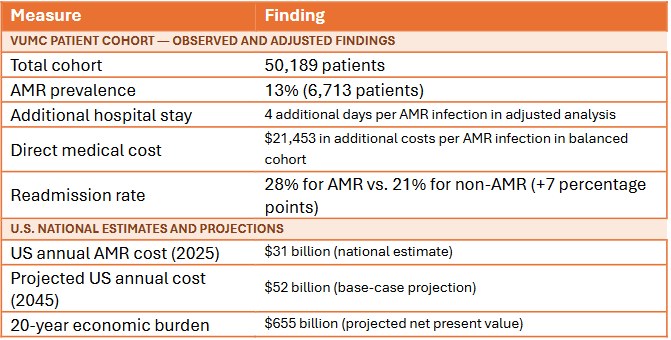
Key Findings
Hospital Impact
AMR substantially increases resource utilization. Across the three infections studied, AMR is associated with longer hospital stays, higher costs, and increased readmissions. Hospital stays account for approximately 83% of the additional hospital costs associated with AMR in the adjusted analysis. The study estimates that AMR-related infections account for approximately 2.1 million additional hospital bed-days annually in the U.S., potentially increasing to 3.5 million days by 2045.
Clinical Burden
Mortality remains substantial across all indications:
- Sepsis: ~34% mortality
- Hospital Acquired Pneumonia: ~33% mortality
- cUTI: ~24% mortality
A significant proportion of deaths occur within the first two weeks of infection, highlighting the importance of early and effective treatment.
AMR was also associated with approximately one-third higher readmission rates compared with non-AMR infections (28% versus 21%, respectively), a difference of 7 percentage points.
Implications
AMR represents a growing threat to hospital capacity and healthcare economics. AMR incidence is increasing faster than both population growth and overall infection rates. Without effective interventions and innovative antimicrobial treatments, the US healthcare system could face significant additional capacity requirements and hundreds of billions of dollars in cumulative costs over the next 20 years. The findings suggest a substantial potential economic return for investments in new antimicrobial therapies that reduce AMR-related hospital utilization and costs.
AMR is not only a major clinical challenge — it is a significant and growing driver of hospital costs, bed utilization, and readmissions, strengthening the case for investment in innovative antimicrobial solutions.
This study was funded by a consortium of organizations including The Biotechnology Innovation Organization (BIO), Pfizer Inc., Merck & Co., GSK, The Alliance for Aging Research, and the Pharmaceutical Research and Manufacturers of America (PhRMA).
The Research
The Press Release
The Summary