



VT Research Finds a 37% Decline in Small-Molecule Oncology Follow-On Research Following the Inflation Reduction Act.
Study Summary
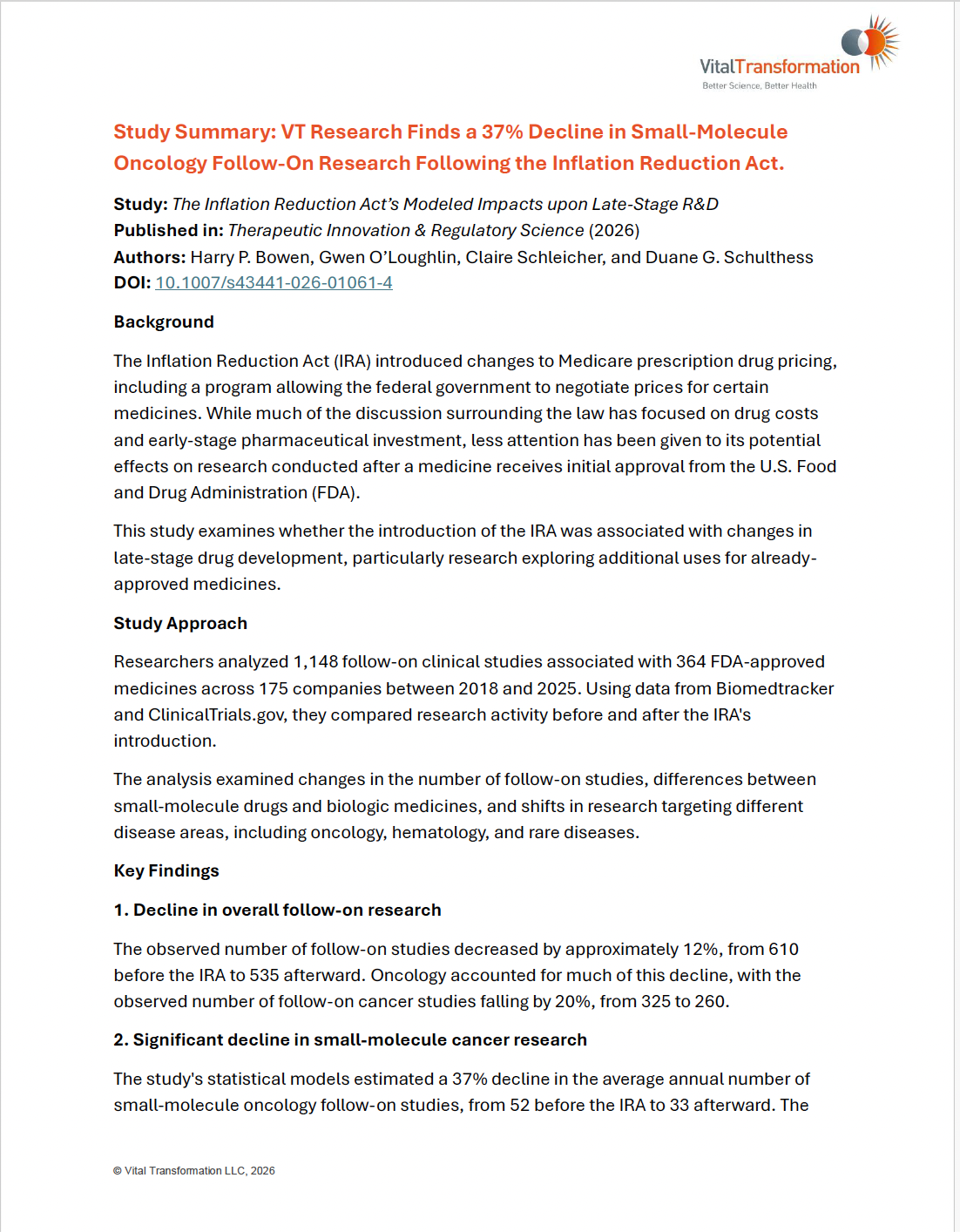
Study: The Inflation Reduction Act’s Modeled Impacts upon Late-Stage R&D
Published in: Therapeutic Innovation & Regulatory Science (2026)
Authors: Harry P. Bowen, Gwen O’Loughlin, Claire Schleicher, and Duane G. Schulthess
DOI: 10.1007/s43441-026-01061-4
Background
The Inflation Reduction Act (IRA) introduced changes to Medicare prescription drug pricing, including a program allowing the federal government to negotiate prices for certain medicines. While much of the discussion surrounding the law has focused on drug costs and early-stage pharmaceutical investment, less attention has been given to its potential effects on research conducted after a medicine receives initial approval from the U.S. Food and Drug Administration (FDA).
This study examines whether the introduction of the IRA was associated with changes in late-stage drug development, particularly research exploring additional uses for already-approved medicines.
Study Approach
Researchers analyzed 1,148 follow-on clinical studies associated with 364 FDA-approved medicines across 175 companies between 2018 and 2025. Using data from Biomedtracker and ClinicalTrials.gov, they compared research activity before and after the IRA’s introduction.
The analysis examined changes in the number of follow-on studies, differences between small-molecule drugs and biologic medicines, and shifts in research targeting different disease areas, including oncology, hematology, and rare diseases.
Key Findings
- Decline in overall follow-on research
The observed number of follow-on studies decreased by approximately 12%, from 610 before the IRA to 535 afterward. Oncology accounted for much of this decline, with the observed number of follow-on cancer studies falling by 20%, from 325 to 260.
- Significant decline in small-molecule cancer research
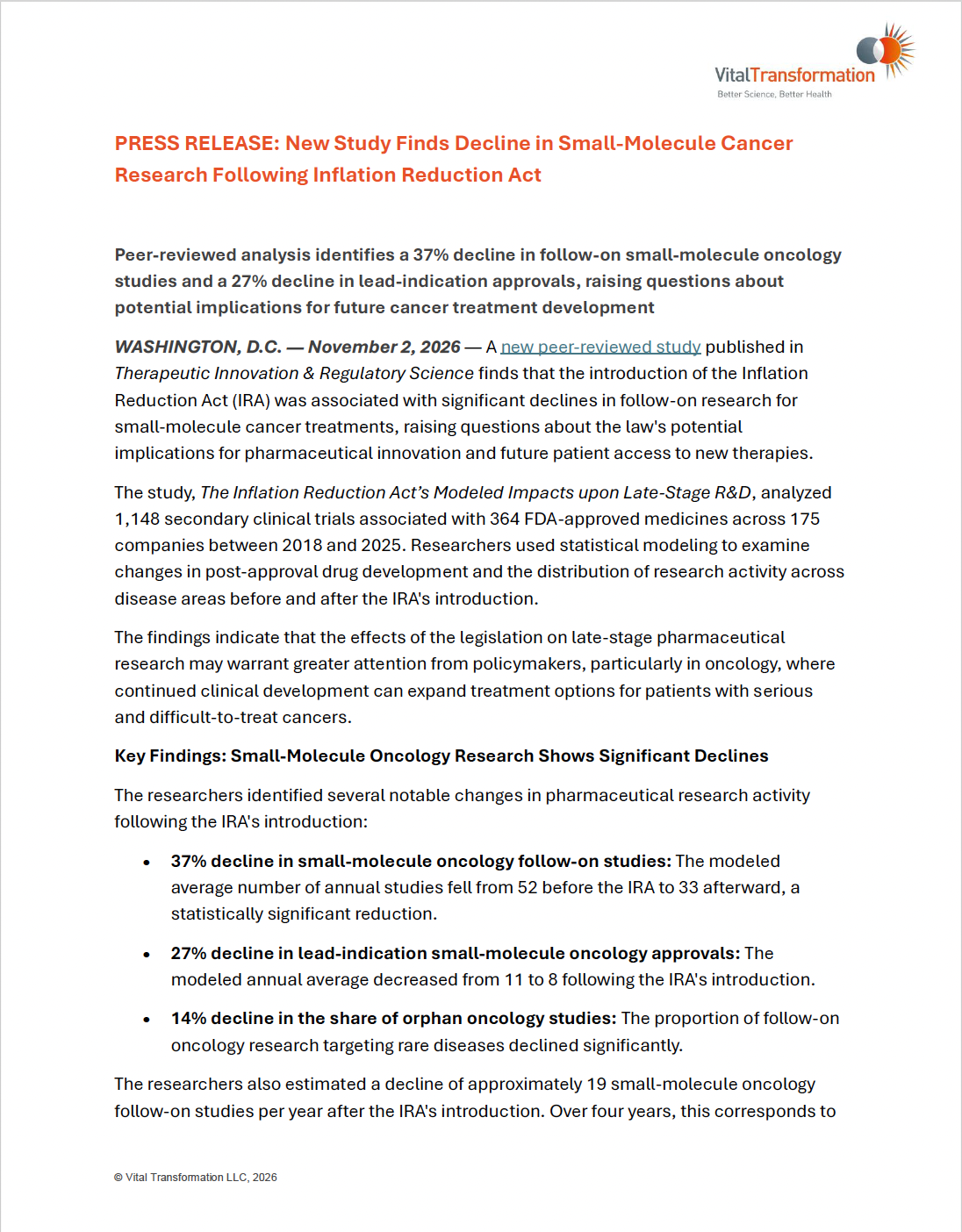
The study’s statistical models estimated a 37% decline in the average annual number of small-molecule oncology follow-on studies, from 52 before the IRA to 33 afterward. The analysis also identified a modeled 27% decline in lead-indication small-molecule oncology approvals.
These findings provide evidence that research involving small-molecule cancer medicines may have been particularly affected following the IRA’s introduction.
- Reduced share of research targeting rare cancers
The proportion of follow-on oncology studies focused on rare diseases, known as orphan indications, declined by 14% after the IRA’s introduction. This finding raises questions about the potential implications for research involving patients with rare cancers and limited treatment options.
- Different trends in hematology
In contrast to oncology, the study found an increase in follow-on small-molecule hematology studies. However, this increase started from a low baseline, and the overall findings for hematology differed from those for oncology.
Implications
The findings challenge the assumption that changes in drug pricing policy would have little effect on research conducted after a medicine’s initial approval. The authors suggest that differences in the timing of Medicare price negotiation eligibility for small-molecule drugs and biologics may influence pharmaceutical companies’ research priorities.
Follow-on studies can establish additional uses for approved medicines, potentially expanding treatment options for patients with different cancers and other serious diseases. A decline in this research could have implications for future medical innovation and the availability of new treatment options.
Conclusion
The study found significant changes in pharmaceutical research activity following the introduction of the Inflation Reduction Act, particularly a decline in small-molecule oncology research and the share of studies targeting rare cancers. The findings highlight the importance of evaluating how drug pricing policies may influence both affordability and continued investment in medical innovation.
The Paper
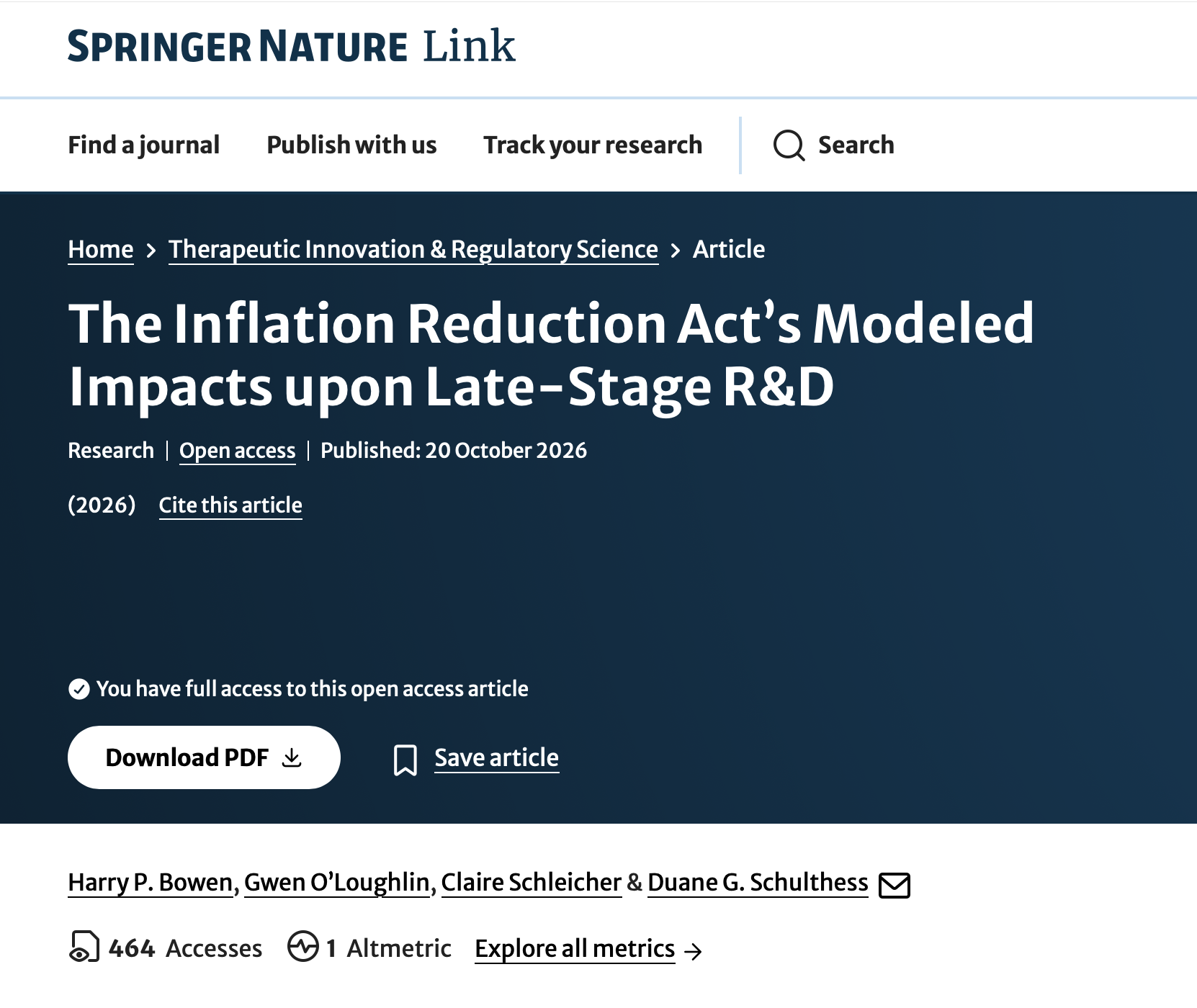
The Press Release
The Summary
Funding disclosure: The study was sponsored by Sanofi, a global healthcare company. The authors disclosed that they received compensation as paid consultants to the sponsoring organization.